
1. Arabica coffee
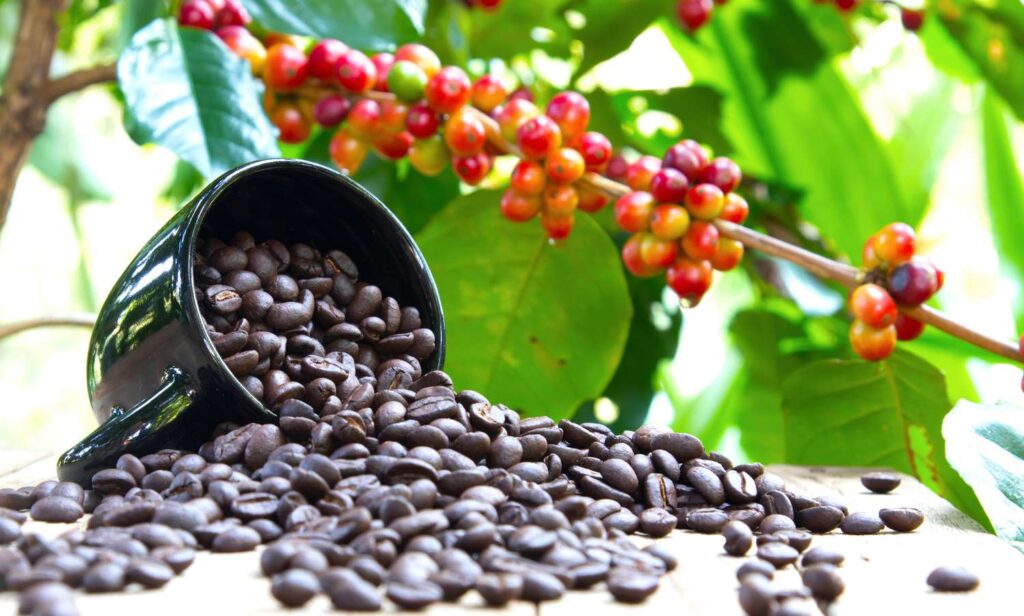
Arabica coffee is much more than just a morning pick-me-up; it is a sophisticated biological species that dominates the global coffee market. Known scientifically as Coffea arabica, it accounts for roughly 60% to 70% of the world’s coffee production.
: Origins and History
Coffea arabica is indigenous to the southwestern highlands of Ethiopia. Legend tells the story of Kaldi, a goat herder who noticed his goats became energetic after eating berries from a specific shrub. From Ethiopia, the plant traveled to Yemen, where it was first cultivated and roasted in the 15th century. The name “Arabica” actually stems from its journey through the Arab world, which served as the gateway for coffee to reach Europe and the rest of the globe.
: Botanical Characteristics
Arabica belongs to the Rubiaceae family. Unlike its hardier cousin, Robusta (Coffea canephora), Arabica is a delicate plant.
- Self-Pollinating: The plant is self-pollinating, which helps maintain the stability of its varieties (cultivars).
- Physical Appearance: The tree can grow up to 5 meters tall if left unpruned, featuring dark green, waxy leaves and fragrant white flowers that smell like jasmine.
Genetics: It is the only species in the genus Coffea that is tetraploid (having four sets of chromosomes), which contributes to its complex flavor profile.
: Ideal Growing Conditions
Arabica is a “high-altitude” coffee. It thrives in specific environments known as the Coffee Belt.
Arabica is a “high-altitude” coffee. It thrives in specific environments known as the Coffee Belt.
Climate: It prefers temperatures between 15°C and 24°C. It is highly sensitive to frost and extreme heat.
Climate: It prefers temperatures between 15°C and 24°C. It is highly sensitive to frost and extreme heat.
: Flavor Profile and Chemistry
This is where Arabica truly shines. Because it contains less caffeine (about 1.2% to 1.5%) than Robusta, it has less bitterness.
- Acidity: Arabica is prized for its “bright” acidity, which can range from citrusy to wine-like.
- Sugar and Fats: It contains about 60% more lipids and almost twice the amount of sugar as Robusta. These molecules are crucial for the aromatic oils that give coffee its flavor.
- Taste Notes: You will often find notes of chocolate, nuts, berries, and caramel in a well-brewed cup of Arabica.
- Notes: Isme chocolate, nuts, berries aur phoolon jaisi sugandh (aromatic notes) milti hain.
: Major Varieties (Cultivars)
There are dozens of Arabica varieties, each with unique characteristics:
Typica: The original base from which many varieties were developed. Clean and sweet.
Bourbon: Known for a complex, buttery sweetness.
Gesha (Geisha): One of the most expensive and sought-after varieties, famous for its floral, tea-like qualities.
Caturra : A natural mutation of Bourbon that is more productive and easier to harvest.
: Challenges in Cultivation
Arabica is high-maintenance. It is susceptible to Coffee Leaf Rust (Hemileia vastatrix) and various pests. Due to climate change, the specific “cool” highland areas suitable for Arabica are shrinking, making sustainable farming practices more critical than ever.
2. Robusta coffee
When people talk about coffee, the conversation often revolves around the delicate, fruity notes of Arabica. However, there is a sturdier, punchier, and increasingly vital player in the global market: Robusta, scientifically known as Coffea canephora.While often unfairly cast as the “lesser” sibling to Arabica, Robusta is a powerhouse of the coffee industry, providing the backbone for espressos, instant coffees, and high-caffeine blends worldwide.

: Origins and Botanical Profile
Coffea canephora originated in central and western sub-Saharan Africa. As the name “Robusta” suggests, the plant is incredibly hardy. Unlike its sensitive cousin Arabica, which requires high altitudes and very specific temperature ranges, Robusta thrives at lower altitudes (from sea level to 800 meters) and can withstand much warmer climates.
Key Botanical Differences:
- Chromosomes: Robusta has 22 chromosomes, whereas Arabica has 44. This genetic difference accounts for the vast variation in flavor and chemical composition.
- Yield: Robusta trees produce a significantly higher yield of cherries per tree compared to Arabica.
- Resilience: It is highly resistant to pests and diseases like “coffee leaf rust,” which can devastate entire Arabica plantations.
: The Flavor Profile: Bold and Earthy
If Arabica is a light wine, Robusta is a heavy stout. It is known for its bold, earthy, and often bitter flavor profile. You won’t find many floral or citrus notes here; instead, expect flavors reminiscent of:
- Dark chocolate and nuts.
- Oak or woodiness.
- Grain-like or burnt rubber undertones (in lower-grade beans).
The bitterness comes from its high caffeine and chlorogenic acid content. However, “Fine Robusta”—a growing movement in the specialty coffee world—proves that when processed with care, Robusta can offer smooth, creamy notes of toasted marshmallow and spiced cocoa.
: The Caffeine and Crema Factor
One of the primary reasons roasters love Robusta is its chemical makeup.
- Caffeine Content: Robusta contains nearly double the caffeine of Arabica. On average, Robusta is about 2.2\% to 2.7\% caffeine, while Arabica sits around 1.2\% to 1.5\%.
- Crema: In the world of espresso, Robusta is the secret ingredient for a thick, long-lasting crema (the golden froth on top). It produces more CO2 during extraction, resulting in that velvety texture that many coffee lovers crave.
: Global Economic Importance
Today, Robusta accounts for roughly 40% of global coffee production. Vietnam is the world’s leading producer of Robusta, followed closely by Brazil (where it is often called Conilon) and Indonesia.
Because it is easier to grow and more productive, it is generally cheaper to produce than Arabica. This makes it the primary ingredient for the massive instant coffee market and a cost-effective filler for commercial “supermarket” blends.